 Live Chat
 Log In

Data Collection at Scale: Infrastructure Best Practices
Your team needs fresher pricing, cleaner competitive signals, or more reliable training data, but the pipeline keeps slowing down or breaking under load. Requests get blocked, retries multiply, and costs rise without improving output. That is usually not a scraping problem alone. It is a data collection infrastructure problem.
What you’ll get here is a practical framework for designing data collection infrastructure that stays reliable, measurable, and cost-aware as volume grows.
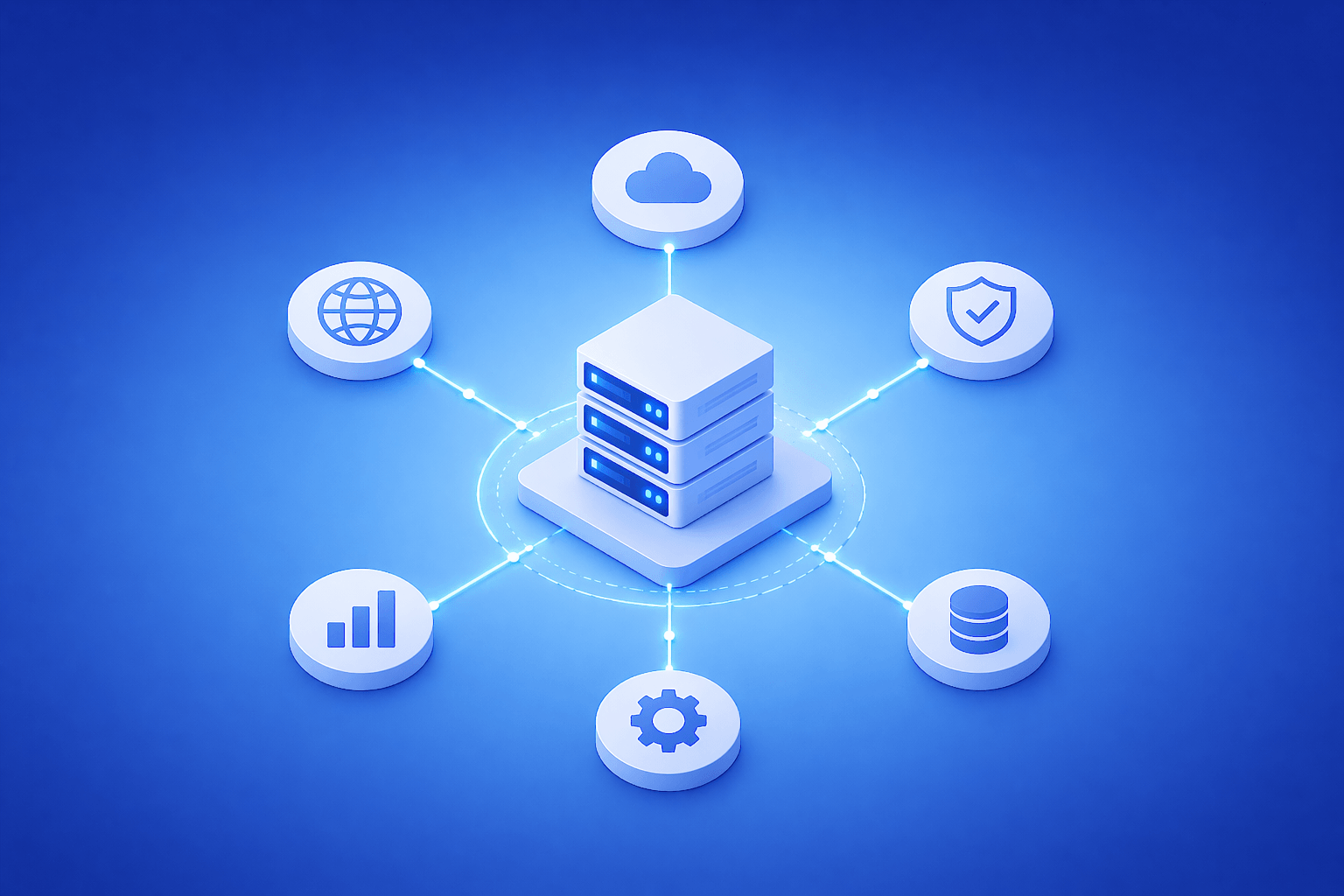
Data collection infrastructure is the system of workers, proxies, queues, storage, monitoring, and controls that turns raw collection jobs into stable, repeatable data pipelines. At scale, strong infrastructure reduces block rates, improves freshness, and lowers the cost of each usable record.
What good data collection infrastructure looks like in production
At scale, “working” is not enough. A system that collects data but produces unstable output or unpredictable costs is not actually healthy.
A strong setup usually delivers four outcomes:
- consistent success rates
- predictable freshness by source
- clear operational metrics
- controlled cost per successful result
That is why infrastructure decisions should be tied to real workloads and real proxy use cases, not just to scraper logic.
The layers that make data collection infrastructure scalable
A scalable collection stack is usually modular. Each layer should be replaceable without forcing a rewrite of the others.
Collection workers
Workers are the execution layer. They fetch pages, APIs, or browser-rendered content and pass the results forward.
At scale, workers should be disposable and stateless where possible. That makes it easier to add or remove capacity when traffic shifts.
Request orchestration
An orchestrator schedules jobs, shapes concurrency, and controls retries. It may be a queue-backed worker system, a workflow scheduler, or a more custom control plane.
The main job of this layer is not just “run tasks.” It is to prevent too much traffic from hitting one target or one proxy path at the wrong time.
Proxy layer
The proxy layer is one of the first places large collection programs fail.
Some workloads perform well on datacenter proxies because they are fast and cost-efficient. Others need residential proxies because the target is more sensitive, more geo-aware, or more aggressive with detection.
In plain terms: the right proxy type depends on the friction level of the source, not just on budget.
Storage and normalization
Raw collection is only useful if downstream systems can trust it.
A healthy architecture usually keeps:
- raw responses for reprocessing
- normalized records for analytics or applications
- metadata such as source URL, timestamp, and collection method
This separation makes debugging and recovery much easier when schemas drift or targets change.
Monitoring and control
Monitoring is not a nice-to-have at scale. It is part of the infrastructure itself.
Without observability, you cannot tell whether failures are coming from proxies, rate limits, rendering, parser drift, or queue pressure.
Why the network layer matters more than most teams expect
Many data teams focus first on extraction logic. That makes sense at small scale. But once volume rises, the network layer becomes a major determinant of cost, success rate, and freshness.
This is especially true for protected targets, geo-sensitive content, and workflows feeding data for AI. When the network layer is weak, the rest of the pipeline becomes noisy and expensive.
A practical network design usually includes:
- segmented proxy pools
- target-aware routing
- request pacing and jitter
- retry rules with hard limits
- proxy health scoring
Choosing the right IP strategy for the workload
Not every source needs the same level of IP realism.
A simple decision framework looks like this:
| Source pattern | Likely starting point | What to watch |
|---|---|---|
| Public and low-friction pages | Datacenter proxies | Block rate, success rate |
| Geo-sensitive or local content | Residential proxies | Geo accuracy, session stability |
| Mixed workloads | Hybrid routing | Cost per successful record |
| AI or long-running pipelines | Route by target friction | Reliability over time |
The key is not to over-engineer too early. Start with the least expensive model that still gives stable, usable results, then escalate when the data proves you need to.
If the system is growing quickly, compare infrastructure choices against available proxy plans and pricing before scaling a design that may become too expensive later.
Concurrency, pacing, and retry logic are part of the infrastructure
Many blocked pipelines are not blocked because of the wrong proxies. They are blocked because request behavior is too aggressive.
A strong data collection infrastructure should define:
- per-domain concurrency limits
- pacing windows and jitter
- retry depth by error type
- escalation rules when a route becomes unstable
For example:
- a 429 may require slower pacing and a backoff delay
- repeated 403s may require switching routes or proxy type
- unstable browser sessions may require longer session persistence and fewer concurrent actions
In plain terms: the system should react differently to different failure modes.
Real-world scenario: retail catalog and pricing collection
Imagine a team collecting category pages, product detail pages, and stock signals from major retail sites. Category pages may be easy to collect and work well on datacenter routes.
But detail pages may be more protected, especially if pricing or availability is dynamic. If the whole system uses one proxy type and one retry policy, the hard pages can quietly degrade the whole pipeline. A better design routes easy pages to lower-cost capacity and reserves more resilient routes for sensitive endpoints.
That shift often improves both data coverage and cost efficiency.
Real-world scenario: AI ingestion pipeline with freshness requirements
Now imagine a team feeding an internal AI system with continuously refreshed public web content. The challenge is not only collection success. It is also freshness, reproducibility, and trust in the collected records.
In this case, infrastructure should prioritize raw response retention, schema versioning, and stable routing by source type. That way, parser changes or target changes do not force a full recollection from scratch.
Watch out for this
Treating all sources the same
A single collection policy for every source usually creates waste. Some domains need more realism. Others just need steady pacing and fast retries.
Measuring only request success
A 200 response does not always mean the record is usable. Soft blocks, empty payloads, and challenge pages can still pollute the dataset.
Using headless rendering too broadly
Browser rendering is useful, but it is expensive. Use it where it changes results, not as a default for every source.
Ignoring freshness as a system metric
A pipeline can have a high success rate and still fail the business if the data is too old when it arrives.
Failing without visibility
If you cannot see block rate, parser drift, retry depth, and route stability, you cannot improve the infrastructure with confidence.
What to measure once the system is live
A strong data collection infrastructure should be measured with both collection and business outcomes in mind.
Track:
- success rate by source and endpoint type
- block rate by domain and route
- freshness by source
- latency and queue delay
- parser completeness or field coverage
- cost per successful record
A useful formula is:
cost per successful record = total request-related spend / valid records collected
In plain terms: how much you paid for each usable data record that made it through validation.
That number often tells you more than total proxy spend by itself.
How to scale without creating operational drag
The goal is not just more throughput. It is more throughput without more chaos.
A good pattern is to scale one layer at a time:
- stabilize the network layer
- tune concurrency by source
- separate raw and normalized storage
- add health scoring and failover
- refine cost controls by workload
This prevents the system from becoming a set of disconnected tools that only one engineer understands.
Frequently Asked Questions
What is data collection infrastructure in simple terms?
It is the full system behind large-scale data gathering, including workers, proxies, queues, storage, and monitoring. It turns individual collection jobs into a repeatable production pipeline.
Why do scraping systems fail as volume grows?
They usually fail because routing, pacing, retries, or proxy selection are too simple for the target behavior. What works at a few hundred requests often breaks when sources start reacting to patterns at scale.
When should I use residential proxies instead of datacenter proxies?
Residential proxies usually make more sense when a source is geo-sensitive, more protected, or dependent on realistic network behavior. Datacenter proxies are often a better starting point for lower-friction, higher-volume collection.
What metrics should be on the main dashboard?
Track success rate, block rate, freshness, latency, parser completeness, and cost per successful record. Those give a clearer picture than request counts alone.
How do I reduce infrastructure cost without hurting output?
Start with the least expensive route that still delivers stable results, reserve higher-cost proxy types for harder sources, and avoid unnecessary browser rendering. Measure cost per successful record, not just raw proxy spend.
Is a queue system necessary for data collection at scale?
In many cases, yes. A queue or orchestration layer helps shape traffic, separate priorities, and recover from failures without overwhelming sources or your own workers.
Final thoughts
Strong data collection infrastructure is what turns fragile scripts into a durable system. It gives you more than scale. It gives you repeatability, clearer costs, and a better chance of keeping data fresh and usable as targets evolve.
If your pipeline is struggling under load, review the infrastructure before rewriting the extractor. Start with routing, pacing, visibility, and source segmentation. Those are often the fastest paths to better results.
For teams still refining the basics, it helps to study a broader comprehensive proxy guide and then map those ideas back to your own workload.
Related Articles

Understanding 403 Errors in Scraping: Causes, Fixes, and Metrics
Why scrapers encounter 403 Forbidden errors, how to quickly diagnose root causes, and the practical solutions that can reduce block rates and lower the cost per successful request.

Common Proxy Errors and How to Fix Them
A practical, operator-grade guide to diagnosing and fixing common proxy errors with clear decision paths, measurable signals, and production-ready tactics for marketing, eCommerce, travel, finance, and data teams.

How Websites Detect Proxy Traffic: Signals, Tests, and Practical Defenses
A practical guide to how websites detect proxy traffic, the signals they use, and how data teams can measure, design, and operate low-friction scraping and automation flows.