 Live Chat
 Log In

Building Reliable Proxy Infrastructure for High-Volume Scraping
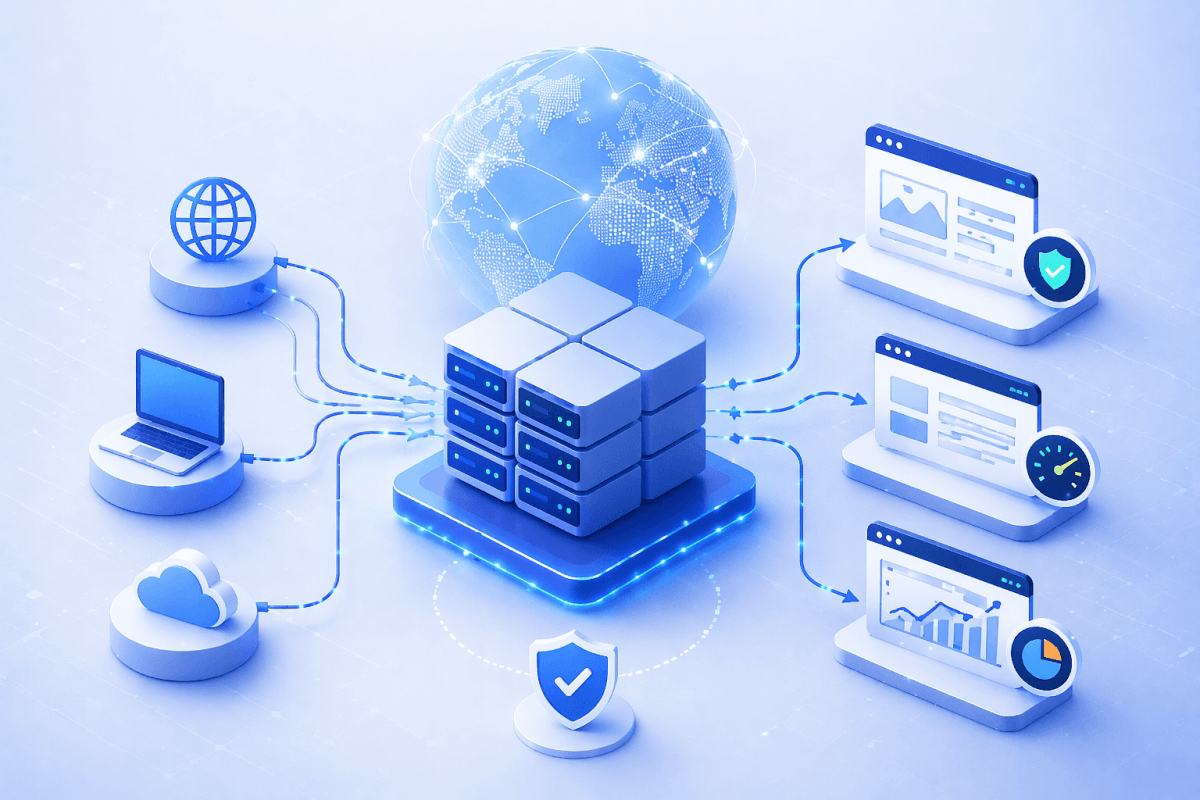
A scraping system can look healthy in testing and still fail the moment traffic scales. Requests start timing out, blocks rise, sessions become unstable, and the cost of retries quietly grows. That is why proxy infrastructure scraping is not just a tooling issue. It is a system design problem.
What you’ll get here is a practical framework for building proxy infrastructure that stays reliable under load, adapts to target behavior, and supports long-term scale.
Proxy infrastructure scraping means designing the network layer behind a scraping system so proxies are selected, rotated, monitored, and replaced in a controlled way. Strong infrastructure improves success rates, reduces wasted requests, and helps teams scale without losing data quality.
Why scraping systems break at the infrastructure layer first
Most teams do not hit parser limits first. They hit infrastructure limits first.
A scraper may work with a few hundred requests, then collapse when it moves to tens of thousands. The reason is simple: targets react differently at scale. They rate-limit more aggressively, detect repeated patterns, and punish weak rotation or poor session handling.
That is why teams building around web scraping proxies need more than a list of IPs. They need an operating system for network behavior.
What reliable proxy infrastructure actually includes
Reliable proxy infrastructure is not just about buying better proxies. It is about connecting several decisions into one stable system.
That system usually includes:
- proxy inventory management
- request routing rules
- rotation policies
- session controls
- health monitoring
- failure recovery
If one layer is weak, the whole pipeline becomes unstable.
The building blocks of high-volume proxy infrastructure scraping
Proxy inventory and segmentation
The first layer is supply. You need enough proxies, but more importantly, you need the right proxy groups for the right traffic.
A practical setup often separates traffic by difficulty. Low-friction requests may run efficiently on datacenter proxies, while protected or location-sensitive requests may need residential proxies.
This matters because not all scraping traffic has the same risk profile. Product detail pages, search pages, login flows, and geo-specific content often behave very differently.
Routing rules
Once proxies are segmented, the system has to decide which one handles each request.
A basic round-robin system may work early on, but it becomes inefficient as traffic grows. Better routing assigns traffic by domain, endpoint type, geography, or session needs.
In plain terms: the proxy should match the request, not just the queue.
Rotation logic
Rotation decides when an IP changes and when it stays stable.
There are three common models:
- per-request rotation for low-state traffic
- sticky sessions for flows that need continuity
- adaptive rotation based on blocks, latency, or session failures
The wrong model usually creates more problems than it solves. Over-rotation can break continuity. Under-rotation can burn an IP too quickly.
Session management
A session is the span of requests that should behave like they came from the same user path.
This matters for:
- paginated flows
- cart or quote workflows
- authenticated sessions
- geo-sensitive browsing
If the infrastructure cannot preserve continuity where needed, the scraper may succeed technically while failing operationally.
Monitoring and scoring
Proxy infrastructure needs constant feedback.
Track at least these signals:
- success rate
- block rate
- latency
- retry depth
- session completion rate
- geo-match accuracy
Then score proxies or proxy groups over time. This allows the system to remove weak performers and reallocate traffic before failure spreads.
Failover and retry controls
No proxy layer is failure-free. The goal is not to eliminate failure, but to recover intelligently.
Good infrastructure answers these questions in advance:
- should this request be retried at all
- should the retry use the same IP or a new one
- should the retry switch proxy type
- when should the workflow stop instead of retrying again
Without these rules, retries can quickly become a cost multiplier.
How to design a system that stays reliable under load
Start with traffic classification
Before choosing a pool, classify the traffic.
For example:
- public low-friction pages
- anonymous but high-volume endpoints
- login-dependent workflows
- geo-sensitive content
- high-friction or high-value requests
This step is easy to skip, but it is one of the most important. Reliable architecture starts when different request types stop sharing the same assumptions.
Match proxy type to target friction
Use the least expensive option that still delivers stable results.
| Traffic pattern | Typical infrastructure fit |
|---|---|
| Public pages and low-friction endpoints | Datacenter proxies |
| Protected or session-heavy flows | Residential proxies |
| Geo-sensitive requests | Residential proxies with location targeting |
| Mixed workloads | Hybrid routing model |
Many teams discover that cost problems come from poor matching, not from pricing alone. That is why it helps to compare traffic design against your available proxy use cases before expanding volume.
Separate infrastructure by target behavior
A scraping system should not use one global policy for every domain.
Different sites have different tolerances for:
- concurrency
- session stability
- geography
- request pacing
- repeated IP use
A domain-aware architecture is usually more reliable than a generalized one, even when total proxy volume stays the same.
Build for observation, not just execution
A scraper that runs is not necessarily a scraper that is performing well.
Reliable infrastructure should make it easy to answer:
- which domains are failing most often
- which proxy groups are degrading
- which workflows need sticky sessions
- where retry costs are rising
If you cannot answer those questions quickly, the architecture is too opaque.
Real-world scenario: retail scraping under mixed target difficulty
Imagine a team scraping thousands of product pages across several online stores. Category pages may be easy to collect and perform well on datacenter routes.
But once the workflow hits inventory checks, personalized pricing, or anti-bot-protected endpoints, the block rate rises. A more reliable design is usually hybrid: keep low-friction traffic on datacenter capacity and move sensitive endpoints to residential routes with more careful session handling.
The value is not just better access. It is lower waste per successful response.
Watch out for this
Treating all requests as equal
A single proxy policy for every domain often causes silent inefficiency.
Scaling before measuring
If you scale request volume before tracking block rate, retry depth, and latency, weak infrastructure becomes expensive very quickly.
Overusing residential traffic
Residential proxies are powerful, but they should be reserved for traffic that truly needs them. Using them on low-friction pages often raises cost without improving outcomes.
Ignoring session continuity
Some workflows fail not because the proxy is bad, but because continuity is broken mid-flow.
Focusing only on raw proxy cost
Cheap proxies are not efficient if they produce more retries or lower success rates.
What to measure in production
A strong proxy infrastructure scraping system should be evaluated with operational metrics, not guesses.
Track:
- request success rate
- block rate by domain
- median and tail latency
- retry depth
- session completion rate
- cost per successful request
A simple formula is:
CPSR = total request-related spend / successful responses
In plain terms: how much you paid for each usable result that actually made it through.
That number is often more useful than cost per IP or cost per GB by itself.
When to expand or redesign the infrastructure
You do not need to redesign the whole system every time one target changes. But certain signals do suggest the current design is no longer enough.
Watch for:
- rising block rates even after pacing changes
- more retries per successful request
- unstable sessions on key workflows
- repeated geo mismatch issues
- increasing cost without increased output
If those signals appear together, the infrastructure likely needs a deeper routing or segmentation change.
Frequently Asked Questions
What does proxy infrastructure scraping mean in practice?
It means building the network layer behind a scraper so proxies are selected, rotated, monitored, and replaced in a controlled way. It is the difference between using proxies and actually managing them as infrastructure.
When do datacenter proxies make more sense than residential proxies?
Datacenter proxies often make more sense for high-volume, low-friction traffic where speed and cost efficiency matter. Residential proxies usually fit better when the target is more sensitive, geo-specific, or session-dependent.
Does every high-volume scraper need a hybrid proxy setup?
Not every one, but many do. Hybrid setups are useful when the workload includes both easy and difficult traffic types. They help reduce cost by saving premium proxy resources for the requests that truly need them.
How do I know whether my infrastructure is the real problem?
Look at failure patterns. If block rates, retry depth, or session resets increase as traffic grows, the infrastructure is often the root cause. Stable parsers with unstable networking are a common sign.
What is the most important metric to watch at scale?
There is no single universal metric, but cost per successful request is one of the most useful. It combines success rate and operational cost into one signal that reflects real efficiency.
How often should proxy infrastructure be re-evaluated?
Regularly. Targets change defenses, geolocation requirements shift, and traffic patterns evolve. A quarterly review is a reasonable baseline, while faster-moving programs may need monthly checks.
Final thoughts
Reliable proxy infrastructure scraping is not built by adding more IPs alone. It comes from matching proxy types to traffic, separating workloads by behavior, and using feedback to guide routing and recovery.
If your scraping system is growing, start by reviewing the infrastructure layer first. Classify the traffic, measure the weak points, and improve one decision path at a time.
If you need a broader baseline before refining the details, it helps to review a comprehensive proxy guide and then map those concepts back to your own workloads.
Related Articles

Understanding 403 Errors in Scraping: Causes, Fixes, and Metrics
Why scrapers encounter 403 Forbidden errors, how to quickly diagnose root causes, and the practical solutions that can reduce block rates and lower the cost per successful request.
Common Proxy Errors and How to Fix Them
A practical, operator-grade guide to diagnosing and fixing common proxy errors with clear decision paths, measurable signals, and production-ready tactics for marketing, eCommerce, travel, finance, and data teams.

How Websites Detect Proxy Traffic: Signals, Tests, and Practical Defenses
A practical guide to how websites detect proxy traffic, the signals they use, and how data teams can measure, design, and operate low-friction scraping and automation flows.