 Live Chat
 Log In

Are Residential Proxies Legal? What Businesses Should Know
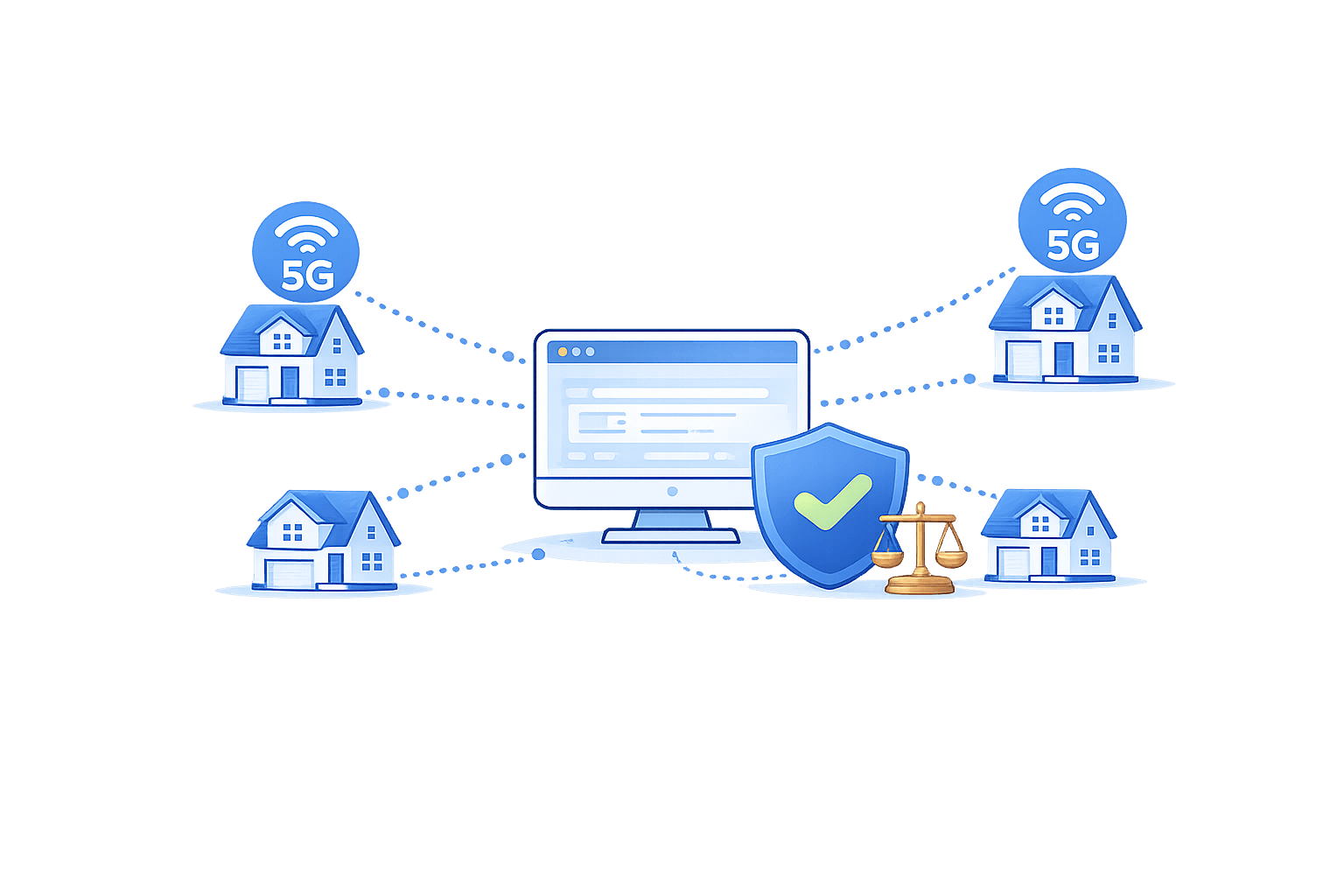
Your team needs clean, geo-accurate data for pricing, ads, or inventory, but legal asks: is this compliant? The question of residential proxy legality sits at the center of data access, risk, and ROI. By the end, you’ll know where the lines are, how to reduce exposure, and what to change in your stack to stay compliant. What you’ll get: a clear, practical framework for legal use and operational guardrails.
Residential proxies can be legal when the IPs are sourced with informed user consent, activities are lawful (no fraud or intrusion), and you honor relevant contracts and privacy laws. They become risky or illegal if used to access protected accounts without authorization, misappropriate personal data, or evade security controls in prohibited ways. Always consult counsel for your jurisdiction.
What counts as a residential proxy—and why it matters
A residential proxy routes traffic through real consumer IP addresses issued by ISPs. This looks like a normal household user to a website. That realism improves reach for geo-locked content and hard-to-access inventories.
From a compliance view, two factors dominate: how the IPs were obtained (consent and control), and how you use them (purpose, authorization, and data handling). Both drive risk more than the technology itself.
Residential proxy legality: the short answer
Residential proxies are generally lawful tools. Legality turns on consent, authorization, and data use, not the proxy label. Using them to fetch public pages for analytics or QA is often acceptable. Using them to break into accounts, scrape personal data at scale, or dodge bans in violation of clear prohibitions can create legal and contractual risk.
The legal and policy pillars you must cover
-
Consent and source of IPs: Use networks where end users gave meaningful, opt-in consent. Avoid dubious “device SDK” sources you cannot audit. Require proof of consent flows, opt-out, and jurisdictional coverage.
-
Authorization and computer misuse: Accessing public pages is different from bypassing authentication or technical gates. In many places, laws addressing unauthorized access or computer misuse can apply to credential stuffing, account takeover, or evasion of paywalls.
-
Contracts and terms of service: Website ToS are contracts. Violating them can lead to civil claims or blocking. Robots.txt is advisory for legal risk but often adopted as a policy line you should justify if you deviate.
-
Data protection: Proxies don’t grant a license to collect personal data. If you process personal data, assess GDPR/CCPA duties (lawful basis, notices, DSRs, minimization). If you don’t need identifiers, strip and hash early.
-
Deception and harm: Do not impersonate individuals, spoof consent, or conduct actions that cause measurable harm (fraud, ad injection, fake traffic). Harm-based claims increase exposure even when access is public.
Legitimate business use cases (and where to draw the line)
Common low-risk uses involve fetching public content at moderate rates for analysis. Examples include:
- Price monitoring of publicly listed items
- Availability checks for travel and retail
- Ad verification for brand safety and placement audits
- SERP monitoring for share-of-voice and rank trends
For a broader view of compliant, non-intrusive workflows, see these practical proxy use cases.
Quick scenarios
-
Ad verification, public pages: You audit creatives and placements across markets by sampling public publisher pages. You spread requests over time and avoid login-only paths. This is often supportable with proper consented networks and logging.
-
Private account scraping: You use residential IPs to pull competitor order data behind logins without permission. This mixes potential unauthorized access with contract breach and personal data risk. Expect elevated legal exposure and blocks.
Choosing the right network: consent, auditability, and control
Your provider choice can make or break compliance. Look for documented consent flows, opt-out, and jurisdictional mapping. Ask for data processing terms and acceptable use policy limits. Verify how they handle abuse reports.
When your targets are sensitive or high-security, prefer networks with session-level controls, strict KYC, and clear chain-of-custody for IP sourcing. This is non-negotiable if your brand reputation is at stake.
If you need details on infrastructure options, review how modern residential proxy networks structure sessions, rotation, and geo coverage.
Residential vs. datacenter proxies for risk and performance
Residential IPs reduce block rates on consumer-facing sites and improve geo accuracy. But higher realism means higher duty to vet consent and control usage. Datacenter IPs are easier to source and audit but may be blocked more on retail and ticketing sites.
Consider a split approach: start with datacenter IPs for tolerant targets; escalate to residential only where needed. For a concise overview of tradeoffs, see how teams deploy datacenter proxies for speed and cost efficiency.
Decision aid: legality posture by activity
| Activity (example) | Likely posture | Risk mitigation to validate |
|---|---|---|
| Public price pages, no login | Lower risk | Rate-limit, respect site stability, document purpose, cache results |
| Ad verification on public pages | Lower risk | Geo-match traffic, avoid heavy concurrency, store minimal data |
| Logged-in data without permission | High risk | Generally avoid; if authorized, get written permission and narrow scope |
| Circumventing paywalls or DRM | High risk | Avoid; legal counsel required |
| Collecting personal data at scale | Elevated risk | Establish lawful basis, minimize identifiers, enforce deletion SLAs |
In plain terms: legality depends on authorization, consent, and data sensitivity. Align safeguards to the riskiest element.
Engineering safeguards that reduce legal and operational risk
-
Keep it public-first: Prefer endpoints that do not require accounts. If you must log in, obtain explicit permission.
-
Modulate load: Start with conservative concurrency. Example targets to validate in a pilot: block rate under 3–5%, stable sessions for 10–20 minutes, and no observable service degradation.
-
Rotate with purpose: Rotate IPs to model normal user distribution, not to smash through controls. Track CPSR (captcha pass success rate) and block reason codes to spot pressure early.
-
Strip and minimize: Remove cookies and PII you don’t need. Hash identifiers where analysis allows. Set TTLs for raw captures.
-
Log posture, not secrets: Keep request metadata, route, and consent provenance. Avoid storing credentials or full payloads unless required.
-
Geo correctness: Validate target-country accuracy and ASN mix. Mismatched geos are a common flag for fraud systems.
Midstream reminder: residential proxy legality is not about the tool name; it’s about provable consent, authorized access, and measured, respectful collection.
Provider due diligence checklist
Use this fast screen before onboarding or scaling volume:
- Consent provenance: Written explanation of opt-in, screenshots, and policy URLs.
- Opt-out controls: User-facing removal path with SLA.
- AUP and prohibited uses: Clear restrictions on fraud, spam, credential abuse.
- Jurisdiction mapping: Data processing terms and subprocessors listed.
- Abuse handling: Contact channel, response timelines, and enforcement examples.
- Session controls: Sticky sessions, rotation rules, and geo targeting documented.
- Logging and transparency: Can they support compliance audits if needed?
Watch out for this
-
Captcha and WAF evasion at scale: Triggering aggressive bypass steps can cross policy lines. Improve crawl etiquette before brute-forcing.
-
Gray IP sources: “Free” or vague SDK networks risk non-consensual traffic. If you cannot verify consent, treat as high risk.
-
Credential reuse: Auto-login flows that violate ToS or share credentials across clients can look like account abuse.
-
Hidden personal data: HTML may embed emails, IDs, or tracking tokens. Redact early to avoid collecting more than you need.
Competitive intelligence without crossing lines
CI teams can stay compliant by focusing on public signals, sampling rates that match human behavior, and strong logging. Combine change detection with caching to cut request volume.
For practical patterns that keep operations efficient and defensible, explore proven competitive intelligence workflows.
When to escalate: internal sign-off and audits
-
New high-sensitivity target: Seek counsel review, document the legal basis, and define redlines.
-
Volume step-up: Re-run load tests, re-validate block rate and session stability, and confirm error budgets.
-
Provider change: Repeat consent and AUP verification, and align KPIs for geo accuracy and uptime.
If you cover these gates, you’ll catch most legal and reputational risks before they land in production.
Frequently Asked Questions
Are residential proxies legal for scraping public prices?
Often yes, if IPs come from consented sources and you gather only public data at respectful rates. You still need to review the site’s terms and avoid actions that degrade service. Keep logs and a clear business purpose to support your posture.
Is rotating IPs to avoid bans illegal?
Rotation itself isn’t illegal, but intent and effect matter. If you use rotation to bypass authentication, paywalls, or cause harm, you increase legal and contractual risk. Use rotation to distribute load, not to defeat security controls.
Do we have to honor robots.txt?
Robots.txt is not a law, but ignoring it can escalate friction and weaken your contractual position. Treat it as a policy input: if you have a defensible reason to deviate, control rate, limit scope, and log your rationale.
Can we collect personal data through residential proxies?
Only if you have a lawful basis and supporting controls. Minimize collection, strip identifiers early, define retention limits, and be ready to process deletion requests. If personal data isn’t required for your analysis, don’t collect it.
Residential vs. datacenter for compliance risk?
Residential often reduces blocks on consumer sites but demands stronger proof of consent and use controls. Datacenter IPs are simpler to audit but may face higher block rates. Many teams start with datacenter and escalate to residential only where necessary.
What engineering metrics should we monitor?
Track block rate, CPSR, geo accuracy, session stability, and uptime. Add compliance signals: proportion of public vs. authenticated requests, data minimization rate, and consent provenance coverage. Alert on unusual spikes and error patterns.
How do we validate a provider’s consent claims?
Request documented opt-in flows, user-facing policies, and an opt-out mechanism. Ask for examples of abuse enforcement. If they refuse, treat it as a red flag and reconsider.
The bottom line and next steps
Residential proxies can be part of a clean, defensible data pipeline when consent is provable, access is authorized, and collection is measured. The key tradeoff is realism versus responsibility: as you gain reach, your duty to audit and control goes up.
Next steps:
- Run a pilot on public pages with conservative concurrency and strict logging.
- Validate block rate, CPSR, geo accuracy, and data minimization in real traffic.
- Complete provider due diligence and document your legal basis.
- Tighten guardrails before expanding to login or higher-risk paths.
If you need deeper dives on networks, use cases, or implementation patterns, explore SquidProxies’ technical guides and examples. And as you scale, keep revisiting residential proxy legality with counsel to reflect new jurisdictions and targets.
Related Articles
Data Collection Compliance Checklist for Proxy Users
A practical, production-ready checklist to ensure that proxy-based data collection remains compliant, resilient, and measurable—designed for teams that operate at scale.