 Live Chat
 Log In

Scrapy Middleware Optimization for Large Proxy Pools
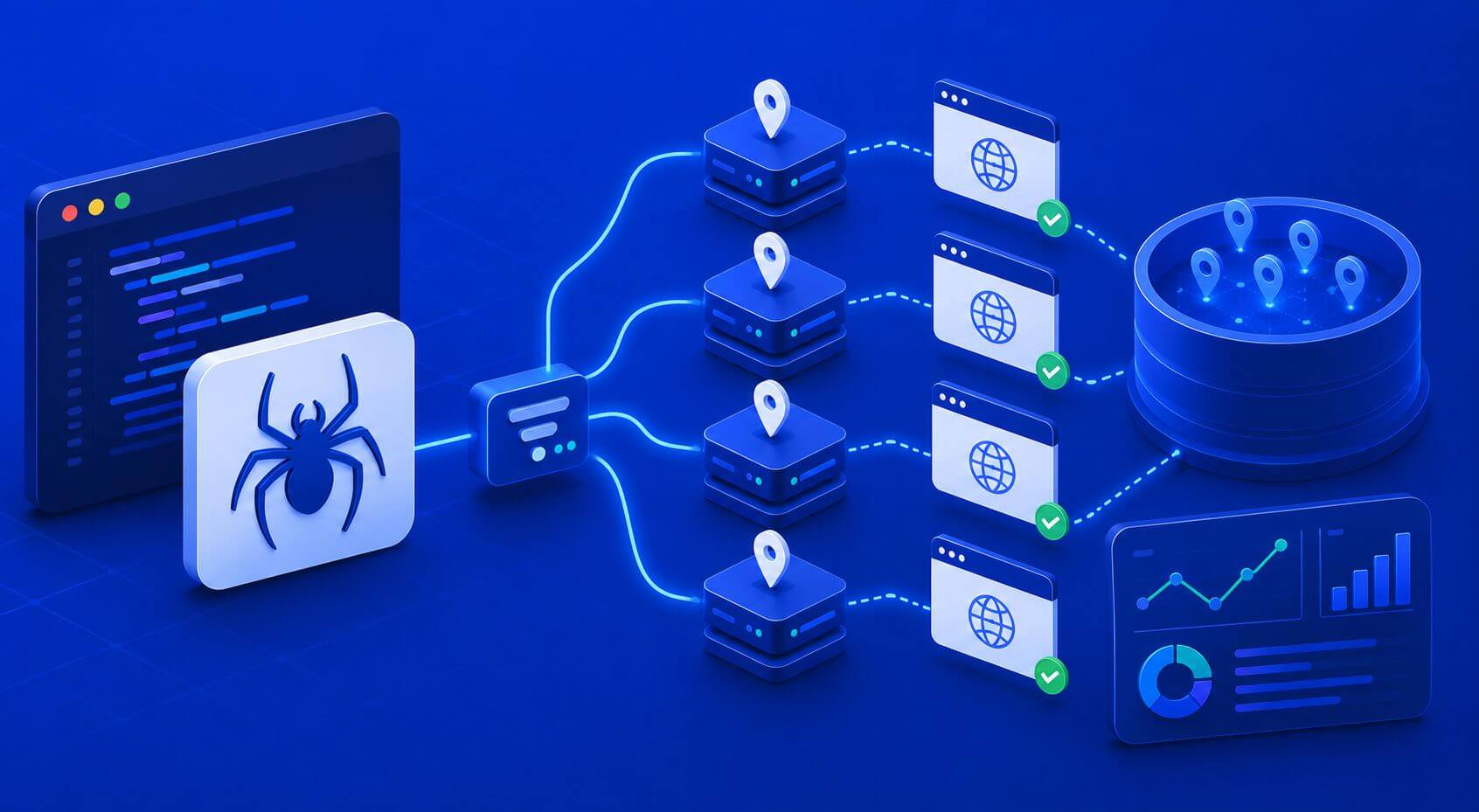
Large scraping systems rarely fail because the scraper itself cannot send requests. They fail because the proxy layer becomes unstable under concurrency, retries, inconsistent session handling, or poor routing decisions. Scrapy middleware optimization helps solve those problems by controlling how requests move through proxy pools, how failures are classified, and how sessions are distributed across targets.
For teams managing large proxy pools, middleware becomes the control layer between the scraper and the network. A well-designed middleware strategy improves throughput, lowers block rates, reduces wasted retries, and keeps proxy costs under control. The goal is not simply to rotate IPs faster. The goal is to maintain stable, valid output at scale.
Why middleware matters in Scrapy proxy systems
Scrapy is built for scalable asynchronous crawling. It can handle high concurrency efficiently, but large-scale scraping creates pressure on the proxy layer very quickly.
Without proper middleware control, common problems appear:
- the same proxy gets overused
- retries loop endlessly
- unhealthy routes remain active
- session consistency breaks
- latency spikes across the pool
- CAPTCHA frequency increases
- certain regions become overloaded
- cost per successful result rises
This is why Scrapy middleware should not only inject proxies. It should actively manage routing logic, health scoring, retry policies, concurrency balancing, and failure classification.
What Scrapy downloader middleware actually does
Scrapy downloader middleware sits between the Scrapy engine and outbound requests.
It can:
- assign proxies
- modify headers
- rotate sessions
- handle retries
- track failures
- apply throttling
- classify responses
- manage authentication
- adjust routing policies dynamically
For large proxy pools, middleware becomes the operational brain of the scraper.
Instead of blindly sending requests through random proxies, middleware allows the system to decide:
- which proxy should handle the request
- when a proxy should rest
- when a session should stay sticky
- when a failed route should be removed
- when residential routing is required
- when lower-cost routes are sufficient
Direct answer: how do you optimize Scrapy middleware for large proxy pools?
Optimize Scrapy middleware by separating proxy selection from retry logic, tracking proxy health scores, limiting retries by failure type, balancing concurrency across routes, and using sticky sessions only when workflows require continuity. The best systems treat proxy pools as dynamic infrastructure instead of static IP lists.
The biggest mistake in proxy middleware design
Many scraping systems use simple random rotation:
proxy = random.choice(proxy_list)
This works at small scale but becomes unstable once concurrency rises.
Why?
Because random selection does not consider:
- proxy health
- recent failure history
- latency
- target sensitivity
- geo alignment
- session persistence
- retry depth
- concurrency pressure
At scale, middleware must become policy-driven rather than random.
The ideal architecture for large proxy pools
A scalable Scrapy proxy architecture usually contains five layers.
1. Proxy pool manager
The proxy pool manager stores all active proxies and metadata:
- IP
- region
- ASN
- proxy type
- failure history
- latency
- cooldown state
- session capability
- success rate
The pool manager should not repeatedly hand out unhealthy proxies.
2. Middleware routing layer
The middleware routing layer decides which proxy should handle each request.
Routing decisions may depend on:
- domain
- request type
- geo requirement
- account session
- anti-bot sensitivity
- concurrency limits
- recent block patterns
This prevents the same strategy from being applied globally to every target.
3. Failure classification engine
Not every failure means “rotate immediately.”
Middleware should classify:
- 403 errors
- 429 rate limits
- CAPTCHA pages
- soft blocks
- timeouts
- geo mismatches
- empty responses
- DNS failures
- TLS issues
Each failure type may require a different response.
For example:
| Failure type | Recommended action |
|---|---|
| Timeout | Retry same region |
| 403 | Switch proxy type |
| CAPTCHA | Lower concurrency |
| Soft block | Validate session |
| Geo mismatch | Change location |
| DNS failure | Remove route temporarily |
This avoids unnecessary proxy churn.
4. Health scoring system
Each proxy should receive a health score based on:
- successful responses
- recent failures
- latency
- retry depth
- CAPTCHA frequency
- session survival
Healthy proxies stay active longer. Weak routes cool down automatically.
This is closely related to broader proxy pool architecture strategies where the goal is long-term stability, not aggressive rotation.
5. Metrics and monitoring layer
Without monitoring, middleware tuning becomes guesswork.
Track:
- success rate
- block rate
- CPSR
- latency
- retry depth
- requests per proxy
- session duration
- geo accuracy
- soft block frequency
These metrics show whether the middleware is improving valid output or simply increasing request volume.
Datacenter vs residential routing inside middleware
Large systems should not treat every request equally.
For lower-friction pages, datacenter proxies may provide faster and cheaper throughput.
For sensitive flows, residential proxies often improve:
- session survival
- geo consistency
- login reliability
- anti-bot resistance
- localized rendering
Middleware should decide which route type to use based on workload.
A practical hybrid strategy looks like this:
| Request type | Recommended route |
|---|---|
| Discovery crawling | Datacenter |
| Product rendering | Residential |
| Login flow | Residential sticky |
| Search monitoring | Residential geo-specific |
| URL validation | Datacenter |
| CAPTCHA recovery | Residential fallback |
This keeps expensive residential traffic focused where it improves results.
Example: simple rotating middleware
Basic middleware structure:
import random

class ProxyMiddleware:

    def __init__(self, proxies):
        self.proxies = proxies

    @classmethod
    def from_crawler(cls, crawler):
        return cls(
            proxies=crawler.settings.get('PROXY_LIST')
        )

    def process_request(self, request, spider):
        proxy = random.choice(self.proxies)
        request.meta['proxy'] = proxy
This works for small systems but has no health tracking, failure handling, or concurrency awareness.
Example: health-aware proxy middleware
A better approach tracks proxy quality.
class ProxyPool:

    def __init__(self):
        self.proxies = {}

    def get_best_proxy(self):
        healthy = sorted(
            self.proxies.items(),
            key=lambda x: x[1]['score'],
            reverse=True
        )

        return healthy[0][0]

    def mark_failure(self, proxy):
        self.proxies[proxy]['score'] -= 1

    def mark_success(self, proxy):
        self.proxies[proxy]['score'] += 1
This creates adaptive routing instead of blind rotation.
Production systems often add:
- cooldown windows
- regional balancing
- proxy type weighting
- domain-specific health
- session grouping
- retry budgets
Middleware optimization strategies that actually improve performance
Use domain-aware routing
Different domains respond differently to proxy behavior.
One target may accept datacenter traffic easily. Another may require residential routing for stable results.
Middleware should assign routing policy per domain rather than globally.
Separate retry logic from rotation logic
A retry does not always require a new proxy.
Sometimes:
- the timeout was temporary
- the target slowed down
- the browser stalled
- the request itself failed
Blindly rotating after every failure increases instability.
Apply proxy cooldowns
When a proxy fails repeatedly, temporarily remove it from rotation instead of permanently deleting it.
Cooldown windows help avoid repeated retries through unhealthy routes.
Limit concurrency per proxy
One good proxy can still fail if overloaded.
Middleware should distribute concurrency across the pool rather than concentrating requests on recently successful routes.
Keep sticky sessions only where needed
Sticky sessions improve continuity but reduce pool flexibility.
Use them for:
- login workflows
- pagination
- carts
- account-based browsing
Avoid unnecessary stickiness for independent pages.
What to monitor before scaling
Large proxy pools should be measured by usable output, not raw request count.
Track these metrics carefully.
Success rate
Percentage of requests that return valid data.
Block rate
403, 429, CAPTCHA, challenge pages, or bans.
Soft block rate
Pages that technically load but return incomplete or incorrect data.
Retry depth
How many retries are needed for one successful result.
Proxy utilization
How evenly requests distribute across the pool.
Session survival
How long a session remains usable before degradation.
CPSR
Cost per successful request.
CPSR = total infrastructure cost / successful validated outputs.
In plain terms: CPSR measures how much every usable result actually costs after retries, compute, and proxy spend.
Real-world scenario: eCommerce scraping infrastructure
An eCommerce team runs 500 concurrent Scrapy workers across multiple marketplaces.
The first version uses random rotation and global retries. Block rate spikes during peak traffic because the same residential routes get overloaded repeatedly.
The improved middleware introduces:
- domain-specific routing
- per-proxy concurrency caps
- cooldown windows
- regional balancing
- health scoring
The result is fewer retries and lower CPSR despite using fewer total proxies.
Real-world scenario: SERP monitoring
An SEO platform collects localized search results across multiple regions.
Random rotation causes region mismatch and unstable rankings.
The optimized middleware binds:
- one region
- one session
- one request group
- one residential route
This produces more stable localized results and reduces false ranking variance.
Common middleware optimization mistakes
Treating all failures the same
403, timeout, CAPTCHA, and geo mismatch should not trigger identical retry behavior.
Over-rotating proxies
Aggressive rotation often creates more instability rather than fewer blocks.
Ignoring soft blocks
A successful HTTP status code does not guarantee usable content.
Using one routing policy globally
Every domain behaves differently. Routing should adapt per target.
Overloading high-performing proxies
Successful proxies often receive too much traffic and degrade quickly.
Measuring request volume instead of usable output
More requests do not always mean more value. Track validated output instead.
Cost optimization for large proxy pools
Large proxy systems become expensive when retries rise uncontrollably.
Middleware optimization reduces cost by:
- reducing wasted retries
- improving session survival
- distributing load efficiently
- avoiding unnecessary residential routing
- lowering CAPTCHA frequency
- improving request success quality
For broader implementation patterns, combine middleware optimization with existing proxy tutorials so proxy behavior remains consistent across frameworks and teams.
How to evolve middleware over time
Do not optimize everything at once.
A practical progression:
- Start with simple rotation.
- Add health scoring.
- Separate retry logic.
- Add domain-specific routing.
- Introduce concurrency balancing.
- Track CPSR.
- Add adaptive policy tuning.
This prevents overengineering before you understand the target behavior.
Frequently Asked Questions
What is Scrapy middleware used for in proxy systems?
Scrapy middleware controls how requests are processed before leaving the scraper. In proxy systems, middleware can manage rotation, retries, authentication, routing, health scoring, and failure handling.
Should Scrapy rotate proxies on every request?
Not always. Independent requests can rotate more aggressively, but session-based workflows often need sticky routing. Rotation should match the target behavior.
Why do large proxy pools still fail?
Large pools fail when concurrency, retries, routing, or session handling are poorly managed. More proxies alone do not guarantee stability.
What proxy type works best with Scrapy?
Datacenter proxies often work well for lower-friction pages and discovery crawling. Residential proxies are usually better for protected, geo-sensitive, or session-heavy workflows.
How do you reduce CPSR in large scraping systems?
Lower retries, distribute concurrency properly, classify failures accurately, and use residential routing only where it improves valid output.
What should I monitor in Scrapy middleware?
Track success rate, block rate, latency, retry depth, session survival, proxy utilization, geo accuracy, and CPSR.
Final thoughts
Scrapy middleware optimization is ultimately about control. Large proxy pools become stable when routing, retries, concurrency, and session handling work together instead of operating independently.
The strongest systems treat proxies as dynamic infrastructure, not static IP lists. They route intelligently, classify failures correctly, and scale only after measuring valid output quality.
For large scraping teams, middleware optimization is one of the highest-leverage improvements available because it affects stability, performance, and infrastructure cost at the same time.
Related Articles

Selenium Proxy Rotation Strategies That Actually Work
Learn practical Selenium proxy rotation strategies that actually work for browser automation, scraping, SEO monitoring, and account-based workflows. This guide covers residential vs datacenter proxies, sticky sessions, browser-session alignment, rotation timing, production-ready examples, and the key metrics teams should monitor to reduce blocks and improve automation reliability.
How to Use Residential Proxies with Puppeteer
Learn how to use residential proxies with Puppeteer to improve browser automation stability, reduce block rates, and handle geo-sensitive or login-based workflows more effectively. This guide covers proxy configuration, sticky sessions, browser contexts, rotation strategies, CPSR optimization, and production-ready best practices for scalable Puppeteer automation.