 Live Chat
 Log In


Ethical Data Collection Practices for Businesses
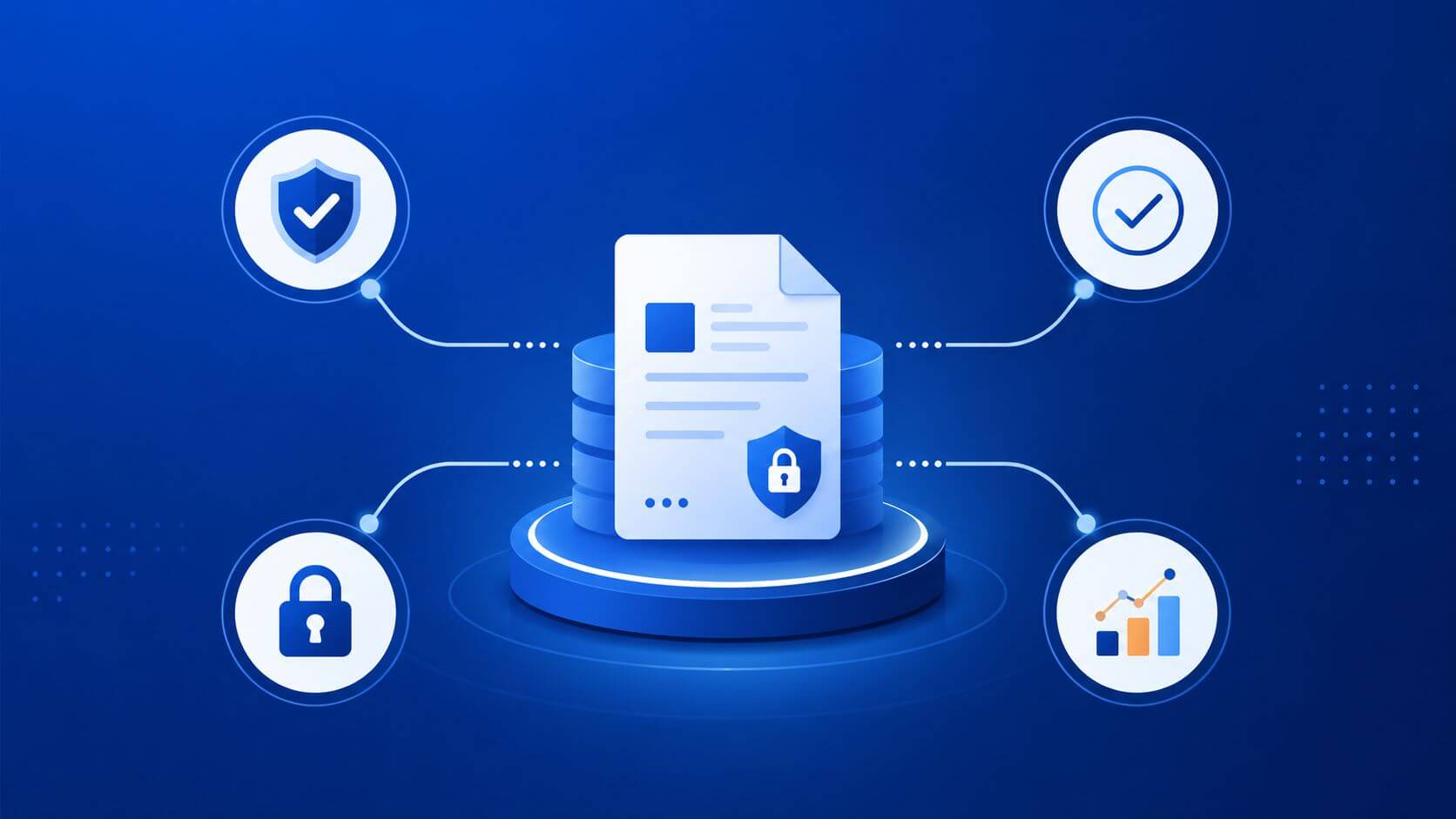
Data collection can help businesses make better decisions, monitor markets, train AI systems, improve customer experiences, and respond faster to competitive changes. But collecting more data is not always better. If the data is gathered without a clear purpose, proper controls, user respect, or source review, it can create legal risk, operational friction, brand damage, and poor-quality outputs.
Ethical data collection practices are the policies, technical controls, and operational habits that help businesses collect only the data they need, from appropriate sources, for documented purposes, with security, transparency, and accountability built in.
For teams using web scraping proxies, analytics tools, third-party datasets, browser automation, or AI training pipelines, ethics should not be treated as a separate legal checklist at the end. It should shape the way data sources are approved, how fields are selected, how pipelines run, how personal data is handled, and how long records are retained.
Ethical data collection protects both business value and user trust. It also improves data quality because cleaner, better-scoped, well-documented data is easier to validate, audit, and use.
What Are Ethical Data Collection Practices?
Ethical data collection practices are the standards a business follows to collect, process, store, and use data responsibly.
They usually include:
- clear purpose
- lawful basis or business justification
- data minimization
- transparency
- user control
- source review
- consent or opt-out handling where required
- security controls
- retention limits
- provenance tracking
- deletion workflows
- accountability and audit records
In plain terms, ethical data collection means the business can explain what it collects, why it collects it, where it came from, how it is protected, who can use it, and when it should be deleted.
If a team cannot explain those points clearly, the collection workflow is not ready to scale.
Why Ethical Data Collection Matters
Ethical collection is not just about avoiding fines. It affects revenue, operations, trust, and data quality.
Poor collection practices can lead to:
- privacy complaints
- cease-and-desist letters
- blocked scraping workflows
- unreliable datasets
- biased analytics
- broken AI outputs
- wasted proxy and compute spend
- security exposure
- customer distrust
- vendor or partner disputes
Strong collection practices help teams:
- reduce unnecessary data volume
- improve model and analytics quality
- lower retry and block rates
- reduce compliance review friction
- support audits and deletion requests
- improve stakeholder confidence
- make data pipelines easier to maintain
The best data systems are not built around collecting everything. They are built around collecting the right data for the right purpose.
Core Principles of Ethical Data Collection
Purpose Limitation
Every data collection workflow should have a defined purpose.
A strong purpose statement answers:
- What problem are we solving?
- What decision will this data support?
- Who will use the data?
- What fields are required?
- How long do we need it?
- What should be excluded?
Bad purpose statement:
“We may need this data later.”
Better purpose statement:
“We collect public product price, currency, availability, and timestamp to monitor competitor pricing trends for weekly merchandising reports.”
Purpose clarity prevents over-collection and makes technical decisions easier.
Data Minimization
Data minimization means collecting only what is necessary for the stated purpose.
If a price monitoring workflow only needs SKU, price, currency, availability, and timestamp, it should not collect full reviews, user names, images, or unnecessary page text.
If an SEO monitoring workflow only needs ranking position, URL, SERP feature, and location, it should not collect unrelated personal information from the page.
Minimization reduces storage cost, privacy exposure, review time, and security risk.
Transparency
Transparency means users, customers, partners, or internal stakeholders can understand how data is collected and used.
Depending on the source and context, transparency may involve:
- privacy notices
- cookie banners
- consent flows
- vendor disclosures
- customer-facing documentation
- internal data maps
- source review records
- clear data use policies
For public web collection, transparency also means documenting source terms, robots signals, and the business purpose behind collection.
User Control
When personal data is involved, users may need ways to access, correct, delete, opt out, or restrict use of their data depending on applicable laws and business commitments.
A responsible system should support:
- opt-out handling
- deletion workflows
- access request workflows
- suppression lists
- retention limits
- downstream deletion propagation
- audit logs
If a business collects data but cannot remove it from downstream systems when required, the pipeline is not mature.
Security
Collected data must be protected.
Security controls should include:
- encryption in transit
- encryption at rest
- role-based access
- logging
- secrets management
- vendor review
- environment separation
- backup controls
- incident response planning
- retention enforcement
The more sensitive the data, the stronger the controls should be.
Provenance
Provenance means knowing where the data came from and how it changed.
A useful provenance record includes:
- source URL or system
- collection timestamp
- source type
- terms review status
- license or usage notes
- fields collected
- parser or pipeline version
- transformation history
- retention policy
- deletion status
Provenance makes datasets easier to audit, debug, clean, and defend.
Ethical Web Scraping and Automation
Web scraping is a common data collection method for public market data, pricing intelligence, SEO monitoring, ad verification, travel research, and AI training datasets.
Ethical scraping focuses on public, permitted, factual, necessary data collected at respectful rates.
A responsible scraping workflow should:
- avoid login-only or paywalled content unless approved
- avoid bypassing technical controls
- respect robots and site policy signals where applicable
- use modest request rates
- cache unchanged content
- minimize fields collected
- avoid unnecessary personal data
- validate source terms
- monitor block and challenge rates
- stop or reassess when friction signals rise
For a deeper legal view, see Legal Considerations for Web Scraping.
Proxies and Ethical Collection
Proxies can support legitimate data operations. They are useful for geo testing, local SEO monitoring, ad verification, price differences by region, routing stability, and avoiding single-route overload.
But proxies do not make a collection workflow ethical by default.
A proxy should be used to support legitimate routing needs, not to ignore access restrictions or force through blocks.
Acceptable proxy use cases may include:
- checking regional prices
- validating local SERPs
- testing ad visibility by market
- distributing public data collection responsibly
- reducing single-origin load
- comparing country-specific content
Higher-risk proxy use includes:
- bypassing paywalls
- evading account bans
- ignoring persistent blocks
- defeating CAPTCHAs or access controls
- collecting prohibited data
- hiding unauthorized activity
For broader infrastructure planning, see Datacenter vs Residential vs ISP Proxies Explained.
Applying Ethics to AI Data Collection
AI systems are only as reliable as the data behind them. If training data is stale, biased, poorly sourced, duplicated, or legally unclear, the model can inherit those weaknesses.
Ethical AI data collection should include:
- source approval
- license review
- personal data filtering
- sensitive data exclusion
- provenance tracking
- deduplication
- quality scoring
- retention limits
- removal workflows
- dataset versioning
AI teams should not collect everything simply because storage is cheap. They should collect data that is relevant, permitted, traceable, and useful for the model’s purpose.
For AI-focused workflows, see Collecting Public Web Data for LLM Training and Building AI Training Pipelines with Proxy Infrastructure.
Decision Framework: Should We Collect This Data?
Use this decision path before launching a new collection workflow.
1. Purpose
Can the team explain the data use in one clear sentence?
If not, do not collect yet.
2. Source
Is the data from a public, permitted, documented, or licensed source?
If it is gated, restricted, or unclear, escalate for review.
3. Fields
Are all fields necessary?
Remove anything that is not directly tied to the purpose.
4. Personal Data
Does the dataset include personal data?
If yes, document lawful basis, minimization, retention, and deletion workflows.
5. Access Controls
Does collection require bypassing login, CAPTCHA, paywall, tokens, or technical restrictions?
If yes, pause and review.
6. Retention
How long will the data be kept?
Define deletion before collection begins.
7. Accountability
Can the team prove where the data came from, how it was collected, and why it was used?
If not, improve provenance logging.
Data Source Risk Matrix
| Data Source | Lower-Risk Use | Higher-Risk Use | Recommended Controls |
|---|---|---|---|
| First-party analytics | Product improvement with clear notice | Hidden profiling | Consent/notice, minimization, retention |
| Public product pages | Price and availability facts | Copying descriptions and reviews | Field limits, source logging, rate limits |
| Public SERPs | Ranking and feature monitoring | Personal profile enrichment | Geo validation, minimization |
| Social profiles | Aggregated trend analysis | Individual profiling or contact scraping | Legal review, field exclusion, opt-out |
| Third-party datasets | Licensed, documented data | Unclear provenance or hidden PII | Vendor review, contracts, sampling |
| AI training data | Open or approved public sources | Unfiltered personal or copyrighted content | Source registry, filtering, lineage |
| Login-only portals | Approved internal or partner use | Unauthorized automated access | Legal review, API preference |
What Not to Collect
Avoid collection when:
- the purpose is vague
- the source is restricted
- access requires bypassing controls
- personal data is unnecessary
- sensitive attributes are involved
- deletion cannot be supported
- terms clearly prohibit the workflow
- the only path is aggressive retrying through blocks
- the business value does not justify the risk
Sometimes the best data decision is to reduce scope.
Metrics That Make Ethics Operational
Ethics should be measurable.
Track:
| Metric | Why It Matters |
|---|---|
| Approved source coverage | Confirms data comes from reviewed sources |
| Data minimization score | Shows whether collected fields match required fields |
| Personal data detection rate | Measures privacy exposure |
| Block rate | Signals source friction or excessive request pressure |
| CAPTCHA/challenge rate | Indicates possible access-control friction |
| CPSR | Shows cost per successful request |
| Retry depth | Reveals aggressive or inefficient collection |
| Deletion SLA | Measures response time for removal requests |
| Retention age | Confirms data is not stored too long |
| Provenance completeness | Supports auditability |
CPSR means cost per successful request.
In plain terms: CPSR tells you how much each valid result costs after proxy spend, compute, retries, and failed attempts.
A rising CPSR can be an operational signal, but it can also be a governance signal. If a source becomes increasingly difficult to access, reassess whether the method is appropriate.
Real-World Scenario: E-Commerce Pricing Intelligence
A retailer wants to monitor public competitor prices.
A responsible workflow collects:
- SKU
- product URL
- price
- currency
- availability
- timestamp
- region
It avoids collecting:
- user reviews
- customer names
- full page content
- unnecessary images
- unrelated metadata
The crawler runs at modest rates, caches stable pages, validates region and currency, and logs source URLs.
This produces useful data while reducing legal and operational exposure.
For infrastructure design, see the E-Commerce Price Monitoring Infrastructure Guide.
Real-World Scenario: Travel Availability Monitoring
A travel platform needs public fare and availability signals.
A responsible workflow:
- avoids account-only content
- avoids checkout-like paths unless approved
- uses public landing pages where possible
- limits request frequency
- stores only required fare fields
- validates region and currency
- monitors block rate and retry depth
If the required data is only available through a protected partner portal, the better path is a feed, API, or commercial agreement.
Real-World Scenario: AI Training Dataset
An AI team wants to build a domain-specific training dataset.
A responsible workflow:
- creates an approved source registry
- excludes restricted sites
- filters personal data
- removes duplicates
- preserves source metadata
- stores license or terms notes
- versions dataset exports
- supports removal workflows
The result is a cleaner dataset that is easier to audit, improve, and defend.
Common Mistakes to Avoid
Collecting “Just in Case” Data
Extra fields increase privacy, storage, and security risk without adding value.
Treating Public Data as Risk-Free
Public data can still contain personal information, copyrighted material, or contractual restrictions.
Ignoring Blocks and Challenges
CAPTCHAs, Cloudflare blocks, and repeated 403s are policy and design signals, not just engineering obstacles.
Buying Data Without Provenance
Third-party datasets should come with clear source rights, collection methods, allowed uses, and deletion support.
Storing Raw Data Forever
Retention should be tied to the business purpose. Raw HTML, logs, and personal data should not be kept indefinitely by default.
Using Proxies as a Compliance Shortcut
Proxies support routing and reliability. They do not replace source review, consent, or lawful basis.
Ethical Data Collection Checklist
Before launching or scaling a pipeline, confirm:
- The purpose is documented.
- The source is approved.
- Terms and access rules were reviewed.
- Fields are minimized.
- Personal data is identified and controlled.
- Sensitive data is excluded unless approved.
- Collection rate is respectful.
- Technical controls are not bypassed.
- Provenance is logged.
- Retention is defined.
- Deletion workflows exist.
- Security controls are active.
- Metrics are monitored.
- Review owners are assigned.
For implementation patterns, review SquidProxies proxy tutorials and broader proxy use cases.
Frequently Asked Questions
What are ethical data collection practices?
Ethical data collection practices are the rules and controls that ensure data is collected for a clear purpose, from appropriate sources, with minimization, transparency, security, provenance, retention limits, and user rights where applicable.
Is web scraping ethical if the data is public?
Not automatically. Public access does not always mean unrestricted use. Ethical scraping still requires source review, purpose limitation, respectful rates, field minimization, and avoidance of access-control bypass.
Do proxies make data collection ethical?
No. Proxies are infrastructure tools. They can support legitimate geo testing and routing, but they do not make unauthorized or excessive collection ethical.
What is data minimization?
Data minimization means collecting only the data needed for a specific purpose. It reduces privacy risk, storage cost, and operational complexity.
How should businesses handle personal data?
They should define lawful basis, minimize fields, secure access, set retention limits, support deletion requests, and document how the data is used.
What should AI teams track when collecting training data?
AI teams should track source URL, license or terms notes, collection timestamp, personal data flags, filtering status, deduplication status, and dataset version.
What metrics help measure ethical collection?
Useful metrics include approved source coverage, personal data detection rate, deletion SLA, retention age, block rate, retry depth, CPSR, and provenance completeness.
When should a business stop collecting data?
Stop or pause when the purpose is unclear, the source is restricted, access controls are being bypassed, personal data is unnecessary, or the business cannot support deletion and audit requirements.
Final Thoughts
Ethical data collection practices help businesses build better datasets, reduce risk, and earn trust. They also improve operational performance because well-scoped, well-documented, carefully collected data is easier to validate and use.
The strongest approach is simple: define the purpose, minimize fields, review sources, respect access signals, secure the data, preserve provenance, and delete what is no longer needed.
Businesses that treat ethics as part of system design will build more resilient data pipelines than teams that treat compliance as a last-minute patch.
Related Articles
Legal Considerations for Web Scraping
A practical, jurisdiction-aware guide to web scraping law in 2026, covering CFAA, GDPR, database rights, ToS, privacy, anti-circumvention, risk tradeoffs, and measurable safeguards for operators and decision-makers.
Are Residential Proxies Legal? What Businesses Should Know
A practical guide to residential proxy legality for teams running scraping, ad verification, and competitive monitoring. Learn what’s allowed, what’s risky, and how to design compliant, production-grade proxy workflows.
Data Collection Compliance Checklist for Proxy Users
A practical, production-ready checklist to ensure that proxy-based data collection remains compliant, resilient, and measurable—designed for teams that operate at scale.